
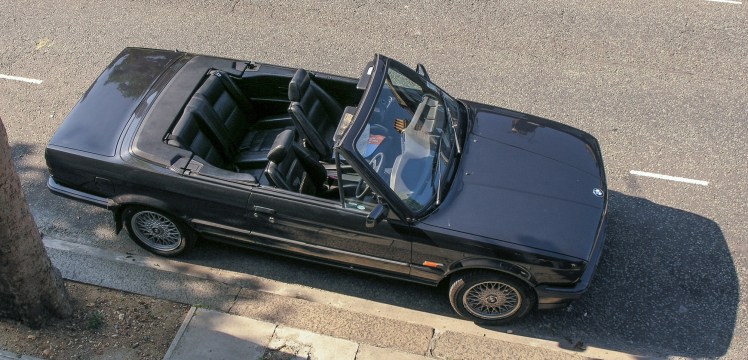
There is much sound and fury about Jersey’s proposed 2030 ban on the importation of pure fossil fuel powered (ICE) cars (with 2035 as the date for banning the importation of hybrids). I contributed to the recent consultation and my position was that we should stick to the existing dates, ie 2030 to ban imports of pure ICE cars and 2035 for hybrids. It should be pointed out that there are already proposed exemptions for classic cars, agricultural machinery and others. Vans are also treated differently. My submission argued that motor sport vehicles could also be exempted.
So why stick to the existing dates?
First, we would be following the UK. The UK government had its own consultation last year and decided to ban new petrol/diesel cars from 2030 and hybrids from 2035. My default position would be to follow the UK. Almost all our vehicles come from the UK, so it makes sense to align. In practice, if the UK is banning the sale of new ICE vehicles, they won’t be available in Jersey anyway. We might want to move faster than the UK, but I cannot see the circumstances where we would want to move slower. We would risk become a dumping ground for fossil fuel powered cars, which would seriously hinder our drive to net zero.
Second, our ultimate target is net zero by 2050. In terms of second hand cars, we already have – give or take – 100,000 vehicles in the island with fossil fuel engines. Typical car lifespans are around 200,000 miles, which in the UK is around 10 years, but in Jersey is much longer. If we want to replace the majority of our fossil fuel powered fleet by 2050, we cannot afford to bring more fossil fuel powered cars in after 2030. We’re just making it harder for ourselves.
Third, we are in the midst of an energy transition and it is easy to underestimate the scale of the change that is already underway. In the UK last year more than one in five cars sold were EVs (electric vehicles), with hybrids adding another 10%. Ten years ago the EV market didn’t exist and hybrids were a tiny share. A lot changes in 10 years.
From 2030 to 2035 it will still be possible to import hybrids (along with EVs) which will meet the overwhelming majority of motoring needs. And even after 2035, there will still be around 100,000 non EVs kicking around in Jersey, and potentially available on the 2nd hand market for decades to come. That will serve us well as the transition to EVs continues, allowing time for example for the charging infrastructure to be built up. If there is one compromise to be made, it could be to continue to allow 2nd hand ICE vehicles to be imported until 2035. It will slow our progress, but not by as much as it would if we allowed brand new ICE vehicles to keep coming past 2030.
There’s a chicken and egg argument here. The investment will only go into charging infrastructure for example if the industry has certainty over the timetable for the changeover. If we haven’t made enough progress as we approach 2035, then of course we can rethink. But for now, we need to keep pushing forward.
It’s hard to argue against the idea that in order to meet our targets, we need to stop importing fossil fuel vehicles. But a lot of people trying to delay the phase out of fossil fuel vehicle imports actually don’t support the targets. They would happily dump the 2050 net zero target and indeed the entire drive to net zero. For them, the import ban on fossil fuel vehicles is a proxy battle for a wider war – against reducing our carbon emissions. So let me make the wider case.
The wider argument
The case against acting on climate change starts with the vacuous argument that “Jersey is too small to count”. But the entire premise of net zero is that everyone has to act. Big or small. The argument that Jersey is too small to count can be deployed at any scale, by anyone.
I’m too small to count.
The UK is too small to count.
Europe is too small to count.
Even countries like China are made up of millions of smaller places, each of which could argue that it’s not worth their while participating in net zero because it won’t make any difference. Every individual, every community, every region has to do their bit. Collective action is critical. If one place or person can be a backslider, so can anyone. Think of it like this. I’m driving along, I chuck a crisp packet out of the car window. Doesn’t matter. It’s only one crisp packet. But the same argument is available to everyone. Fifty thousand drivers all throwing a crisp packet out of the window because individually none of them matter and Jersey ends up drowning in litter.
But there’s a more ambitious argument for sticking to our green goals. They are better for us in almost every way. The internal combustion engine is on its way out. And it’s a good thing. Let us not forget that if you run a car engine inside an enclosed space, it will kill you. Quite apart from the impact of carbon emissions on the climate, the gases are poisonous. They contribute to bad air quality. The switch to EVs will improve air quality (and lower the running costs of a vehicle).
Everyone knows that – outside of niches – EVs will take over (in Norway, 80%+ of new car sales are already EVs, and in China it’s 50%+ so there are no fundamental technical obstacles to EV adoption). The only question is, how quickly the transition happens. We can choose to be a holdout, dragging our feet, resisting the march of progress. Or we can move with the flow, embrace the future, seize the opportunity.
More than that, by sticking to our targets we can reaffirm that international commitments, acting in the common good, meeting our responsibilities are all things that are worth something in a time of global instability. Quiet alignment with science based targets will gain us respect and serve our long term interests as a responsible member of the international community. Whatever the turbulence at the moment, the world always returns to a rules based order. We have much to gain from backing that position.
If, when we get to 2030 or 2035 we still feel the need to import some ICE vehicles, we can change at that point. But giving up now will simply delay the adaptation that we know we must make.

 Jonathan Renouf
Lots of words, but no common sense
LikeLike
Difficult to interpret what you actually mean Mike….maybe you could elaborate?
LikeLike